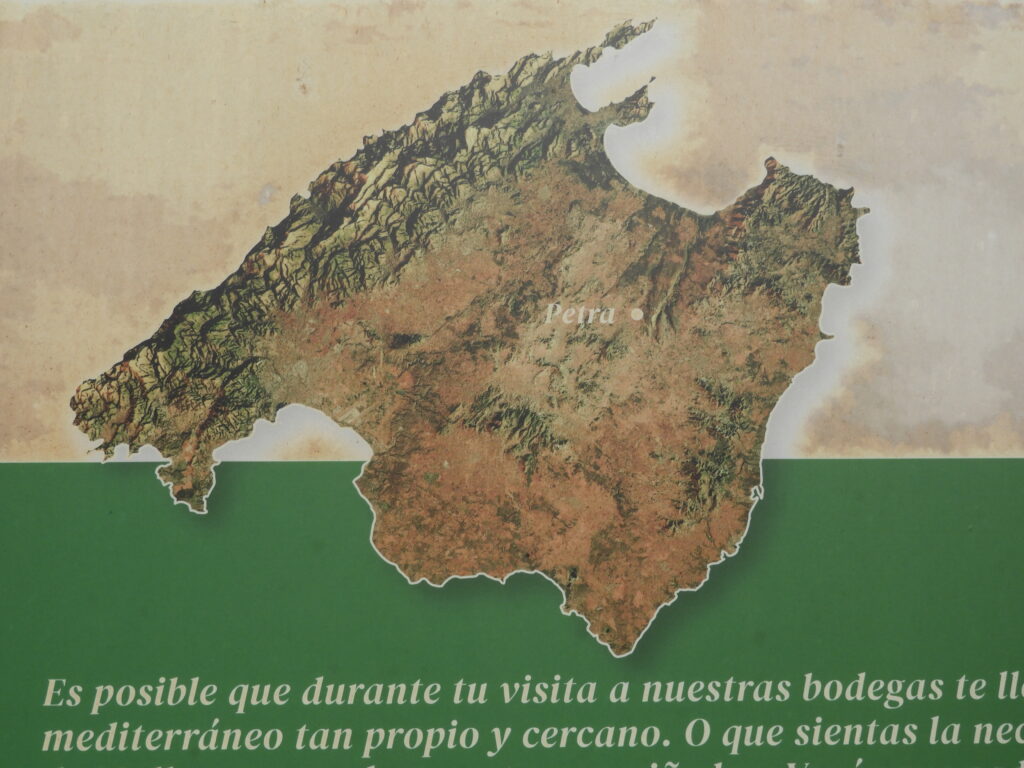
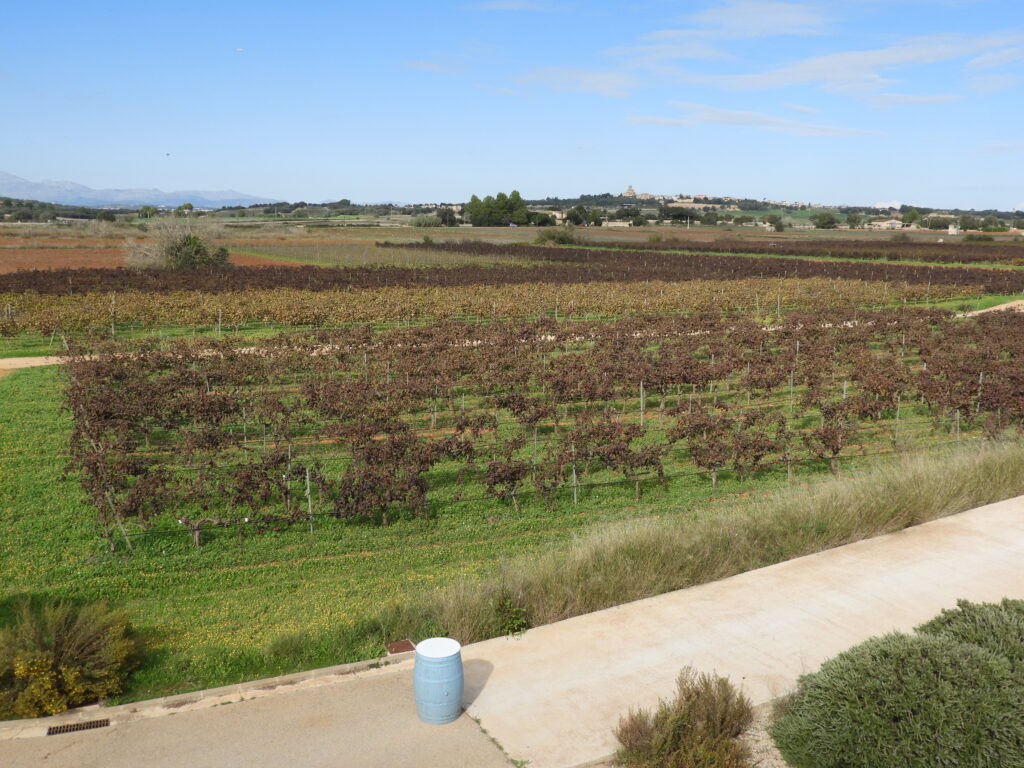
In the heart of Mallorca, far from the noise of crowded beaches, lies a quiet valley sheltered between the Serra de Tramuntana and the Serra de Llevant.
Here, the constant Embat wind blows from the sea, drying out the island’s natural humidity and offering the vines extraordinary conditions to thrive.
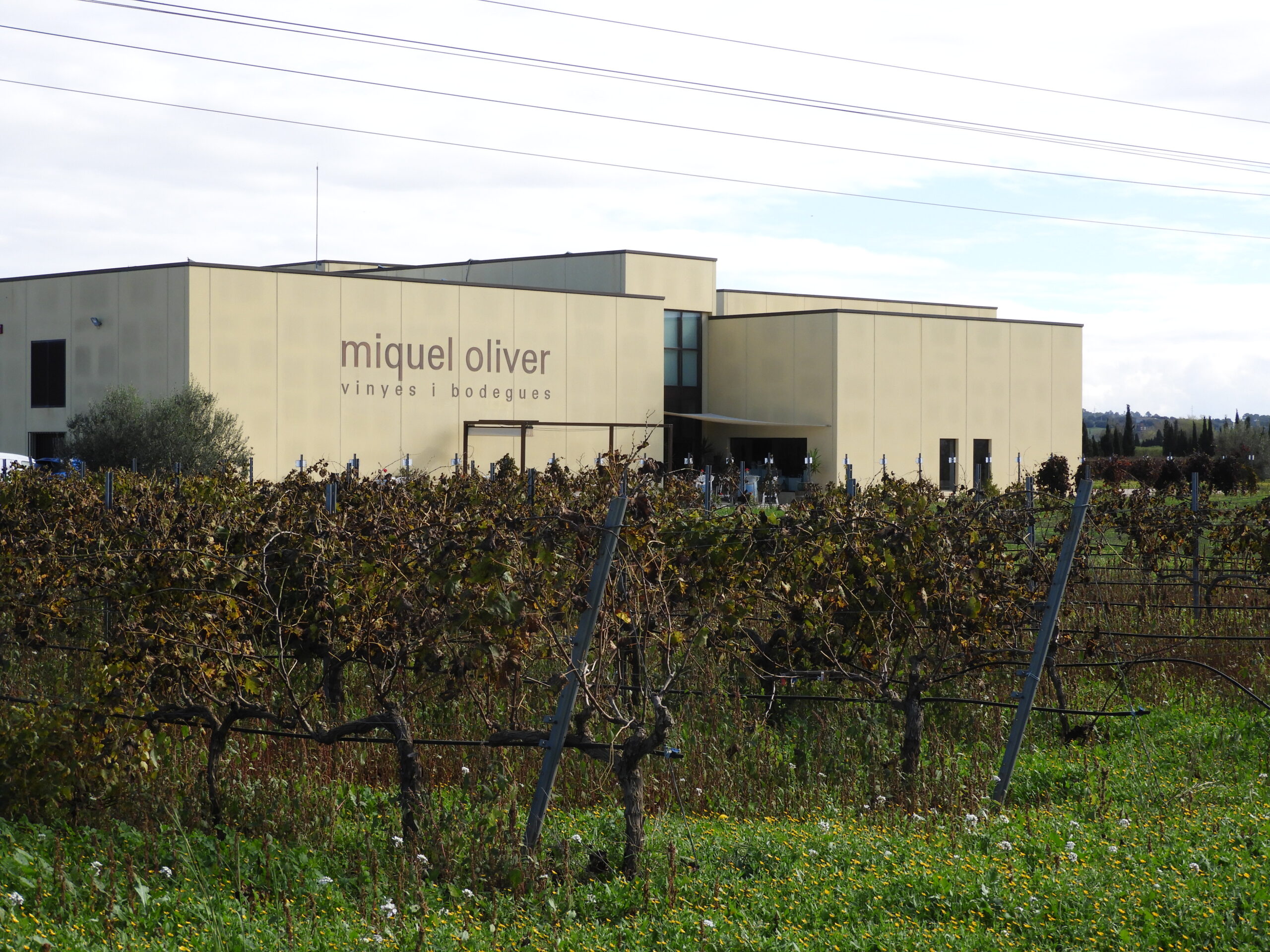
In this landscape, Bodega Miquel Oliver, in the village of Petra, becomes more than a winery: it is a sensory, family and territorial journey.
A FAMILY STORY OF CONTINUITY
Founded in 1912 by Melchor Oliver, Bodega Miquel Oliver is now in its fifth generation. The fourth is represented by Pilar, who guided me during my visit, while her son and grandson are already involved in the work, a clear sign of continuity, one of the pillars of the estate’s identity.
The winery has a dual soul: in the centre of Petra stands the original building, an architectural gem that preserves its history, while twelve years ago a new, modern facility was inaugurated just outside the village, surrounded by vineyards and designed to embrace the future.
This balance between memory and innovation creates a unique atmosphere.
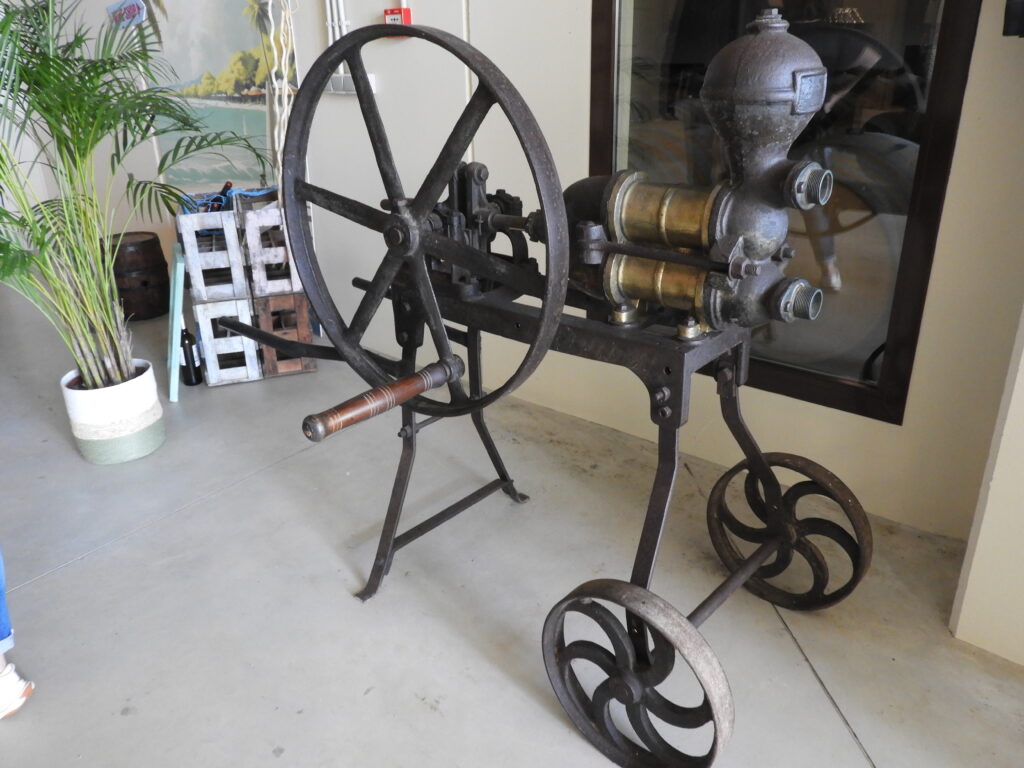
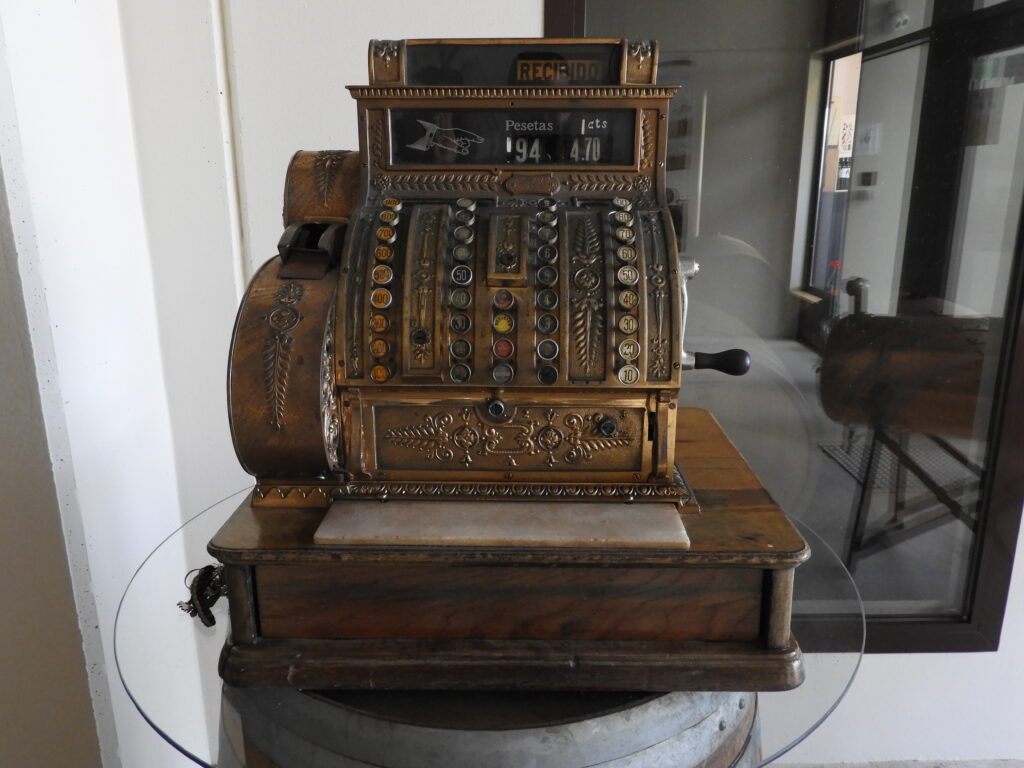
Inside the new premises, one can still find ancient tools, such as an old wine pump and an early mechanical “computer” from 1930 used to calculate the cost for those buying bulk wine.
SOIL, CLIMATE AND VINEYARD: THE WINERY’S TERROIR
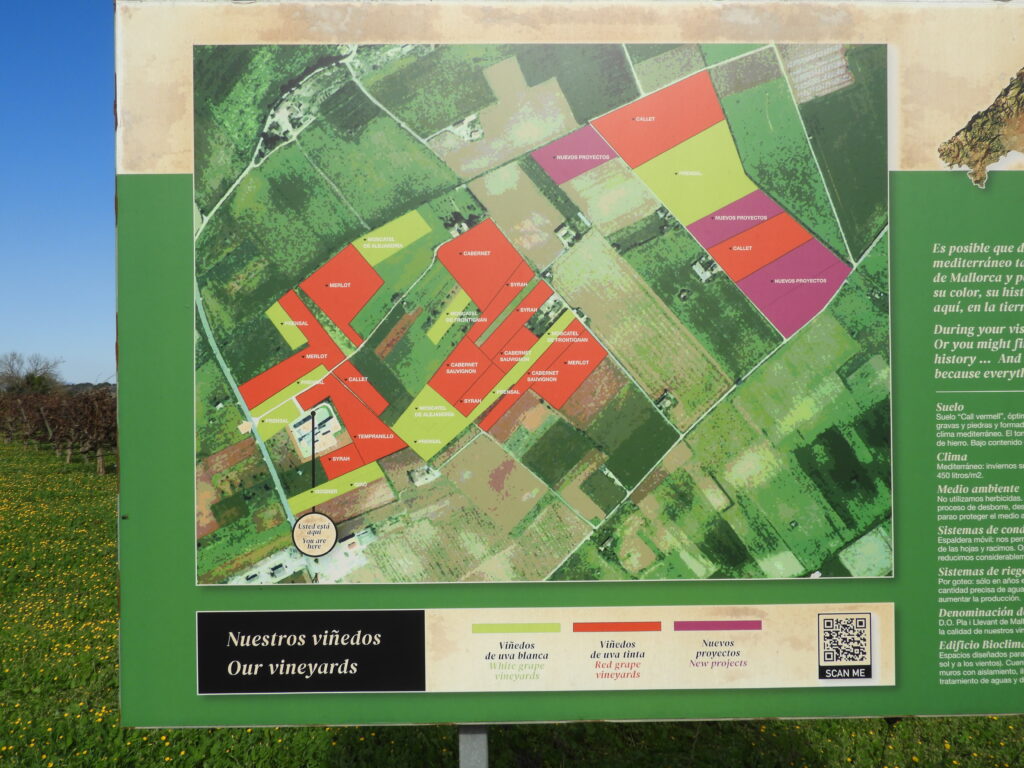
The estate lies within the D.O. Pla y Llevant, one of the two appellations on the island, and the largest one by extension, with 12 hectares of vineyards directly managed.
The soil is structured in three distinct layers: the lower one is composed of sand, the middle of limestone, and the surface of clay, known locally as call vermell due to the iron oxide that gives it its reddish color.
The Embat wind plays a crucial role: on an island where humidity could pose a risk to the vine, the Embat helps to mitigate those factors and creates a particularly favorable micro-zone.
Moreover, no herbicides or pesticides are used; vineyard work is partly manual and mechanical, and drip irrigation systems are adopted during periods of severe drought.
THE GRAPE VARIETIES THAT TELL THE ISLAND’S STORY
Right at the entrance to the estate, a small educational vineyard unfolds before us. Here grow most of the grape varieties, both native and international, cultivated on the island: a way to immediately set the mood and to make visitors aware of the remarkable ampelographic richness that characterizes an island of relatively “small” size.
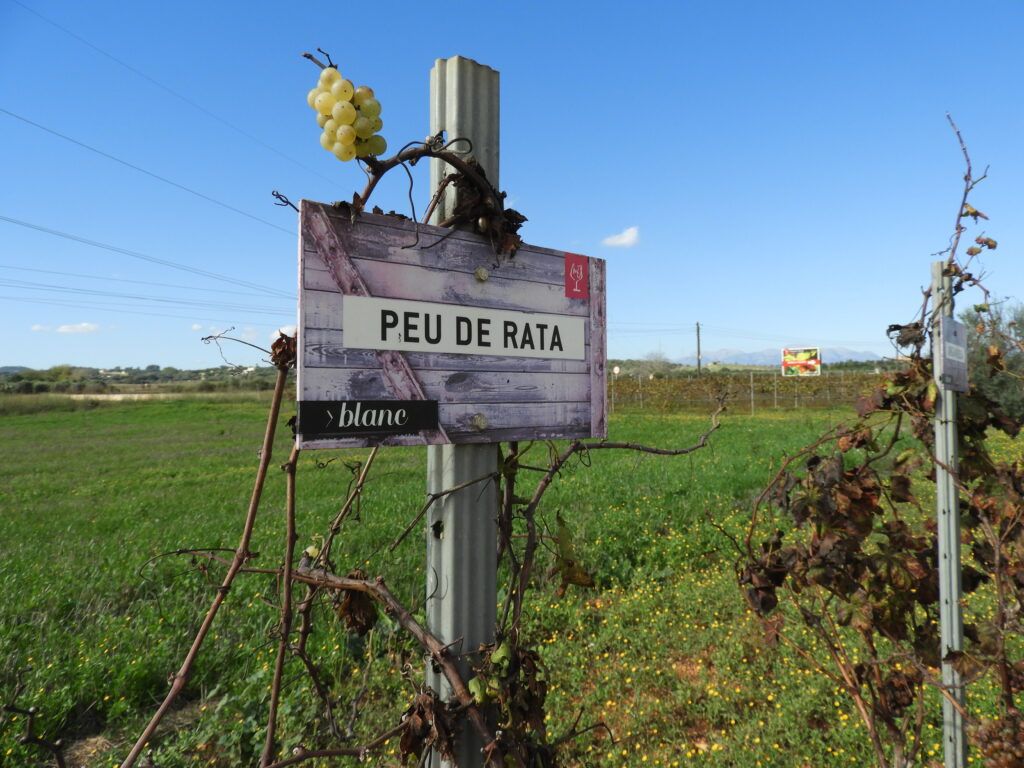
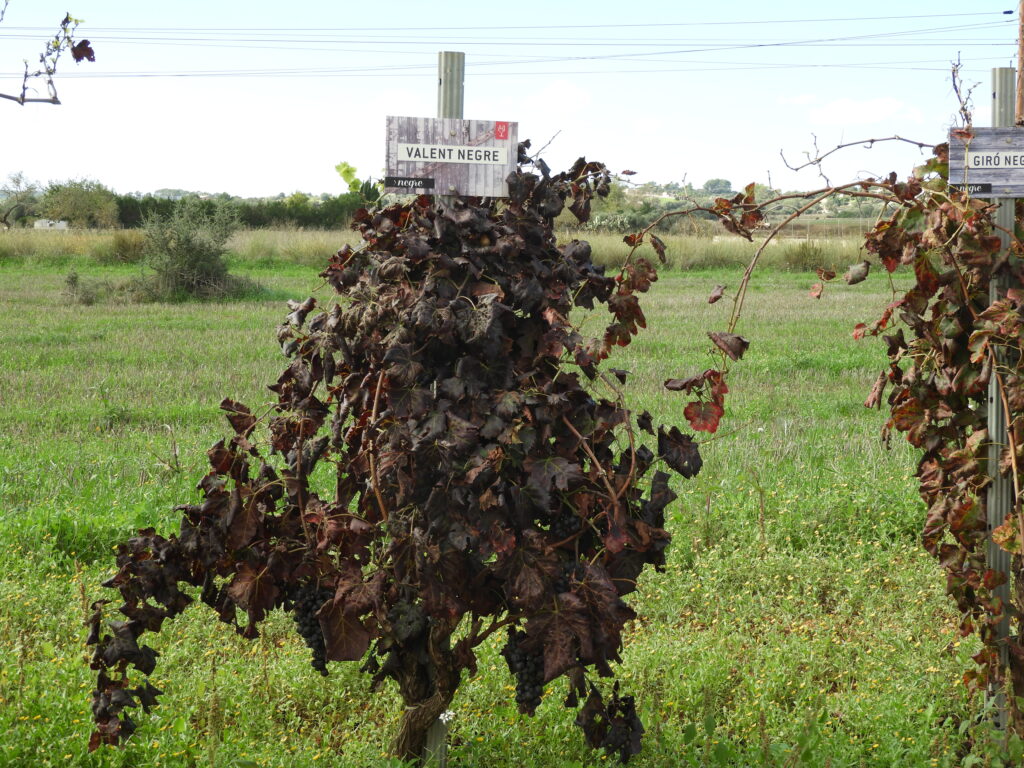
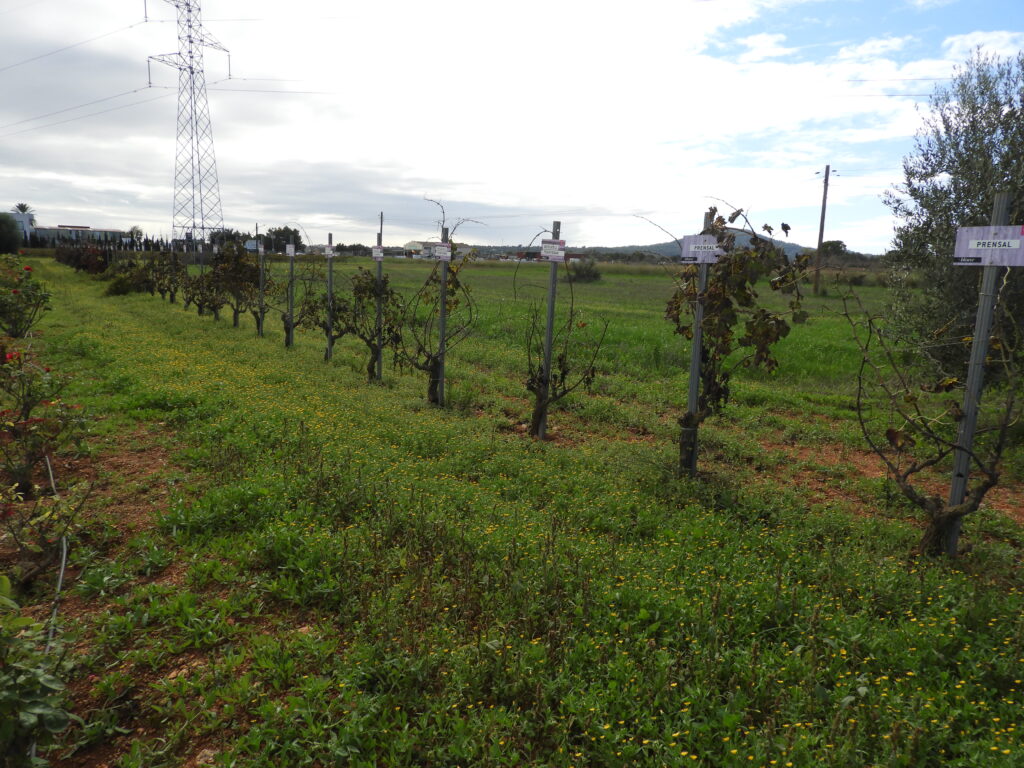
At the core of production lie some of Mallorca’s emblematic varieties:
- Moscatell (or Moscatel de Alejandría and Frontignan): an aromatic white grape, also used in the winery for elegant dry wines of great finesse.
- Callet: an indigenous red variety, a key component in the estate’s structured wines.
- Prensal (Blanc): a typical white grape of the region.
These varieties form the foundation upon which Pilar builds her vision of strong territorial identity, combining unique soils, a Mediterranean climate, and the dedication of the Oliver family, who work tirelessly to both preserve tradition and embrace innovation.
ADOPT or GIFT A VINE ROW
You can choose to adopt a vine row in Tuscany (Chianti) or in Puglia (Salento). The adoption lasts 12 months and can start at any time. Monthly updates and insights are sent via email. Adoption certificate and wooden plaque on the vine row. Wine box made with the chosen grape variety delivered directly to your home
TRADITION AND INNOVATION: THE DUAL SOUL OF THE WINERY
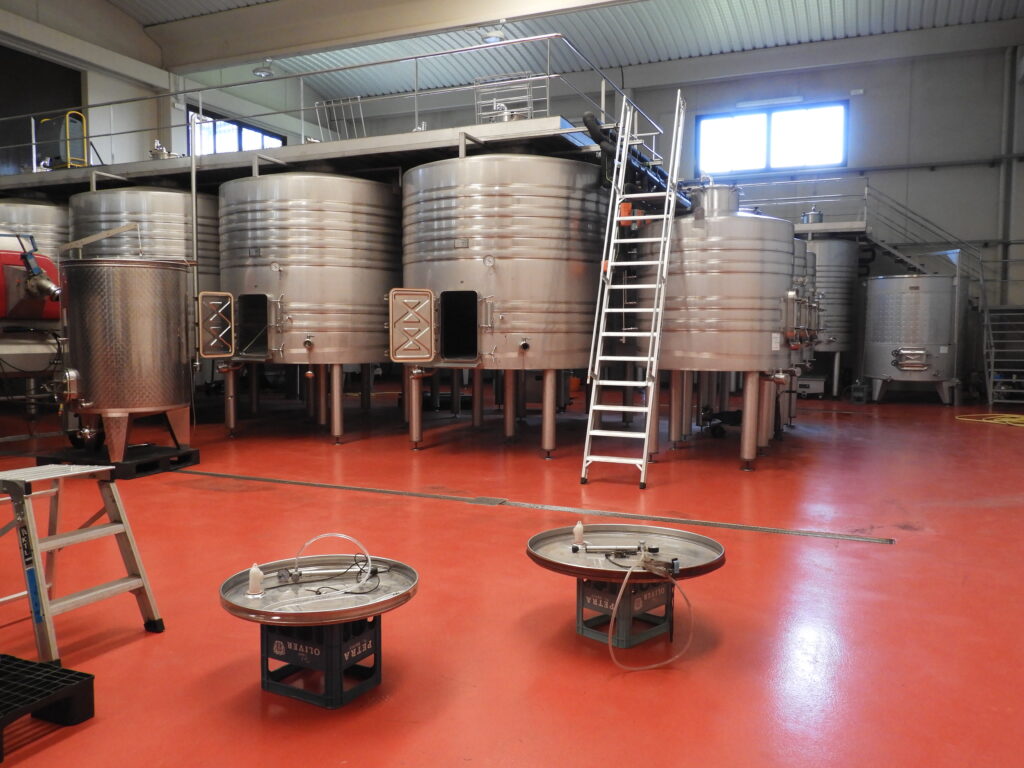
Bodega Miquel Oliver combines time-honored techniques with bold experimentation. On one side, you find vinification in stainless steel and aging in French, American, and acacia oak barrels; on the other, the pursuit of an ancestral method, one of the oldest winemaking techniques, for a creation set to be released in 2026: a pure Moscatell Frontignan.
This approach perfectly reflects the winery’s philosophy: not a romantic attachment to tradition for its own sake, but a tradition that becomes a springboard for new expressions, and an innovation that never forgets where it comes from.
A SENSORY EXPERIENCE: A JOURNEY FOR ALL THE SENSES
The visit to the winery is designed to surprise and engage.
Those who come to the Petra estate can choose among several immersive routes:
- Emotive Tour: a guided visit to the historic cellar in the center of Petra, followed by a transfer to the new facility among the vineyards, and concluding with a tasting of three wines.
- Enologic Tour: a more technical experience, focused on the vineyards and production process, ending with a tasting of three wines.
- Gastronomic Tour: includes both the vineyard and the winery visit, and concludes with a tasting of five wines paired with traditional Mallorcan dishes in an exclusive space.
- Choco Tour: coming soon — a new experience planned for next year, pairing chocolate with wines.
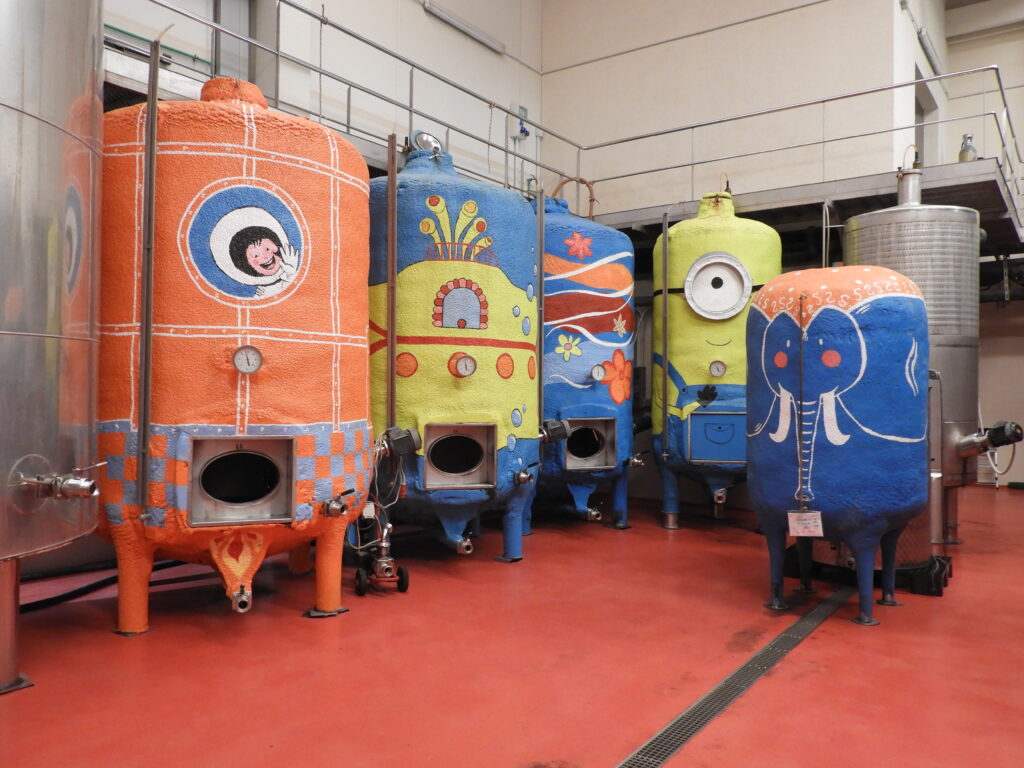
The winery also welcomes younger visitors and those taking their first steps into the world of wine. There’s a dedicated space for children with five stainless-steel tanks painted by a local artist, featuring space themes or the beloved Minions, and a four-stage olfactory journey: from grapes to must in steel, from must in barrel to wine in aging, training the sense of smell to recognize the magic of winemaking.
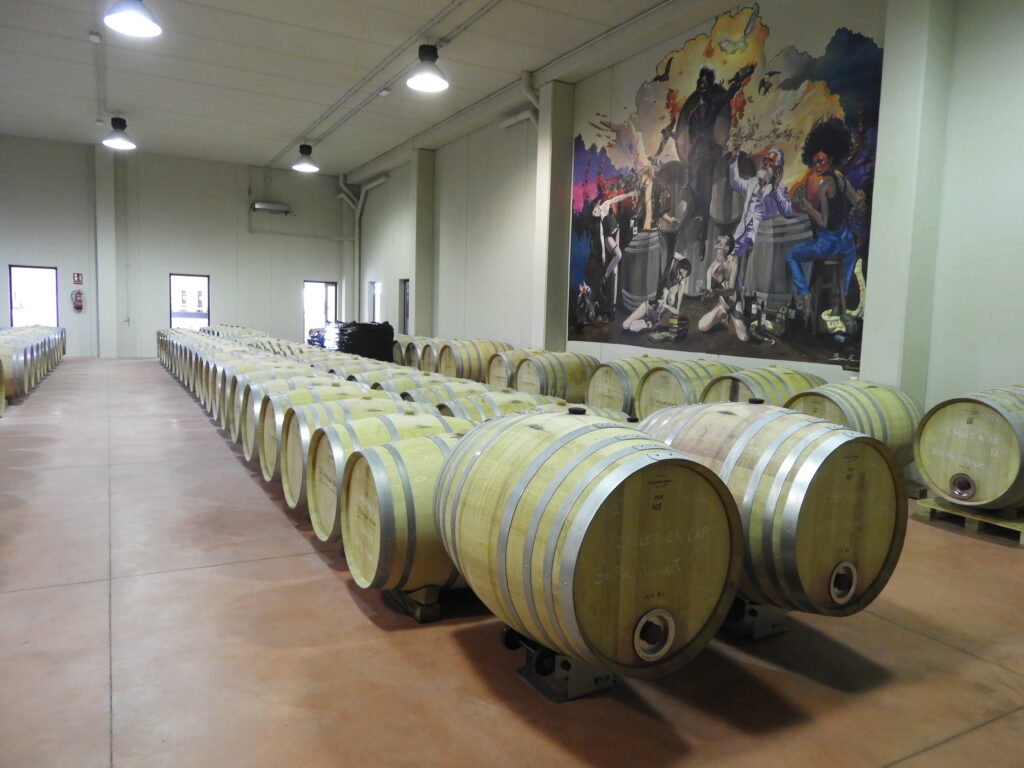
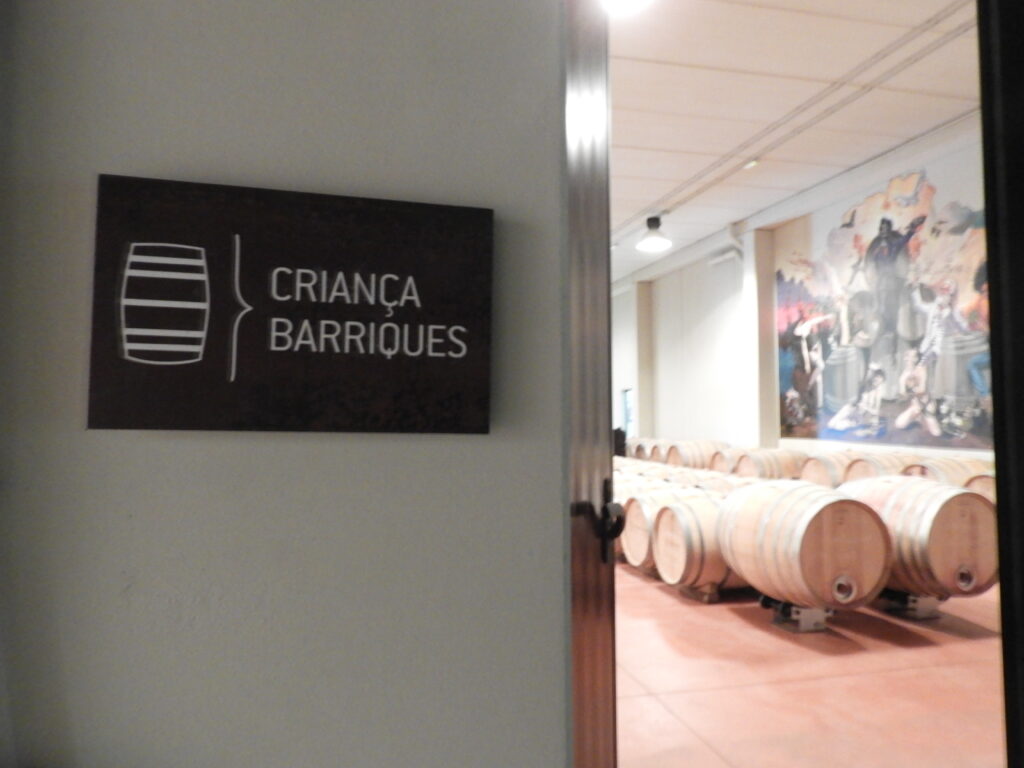
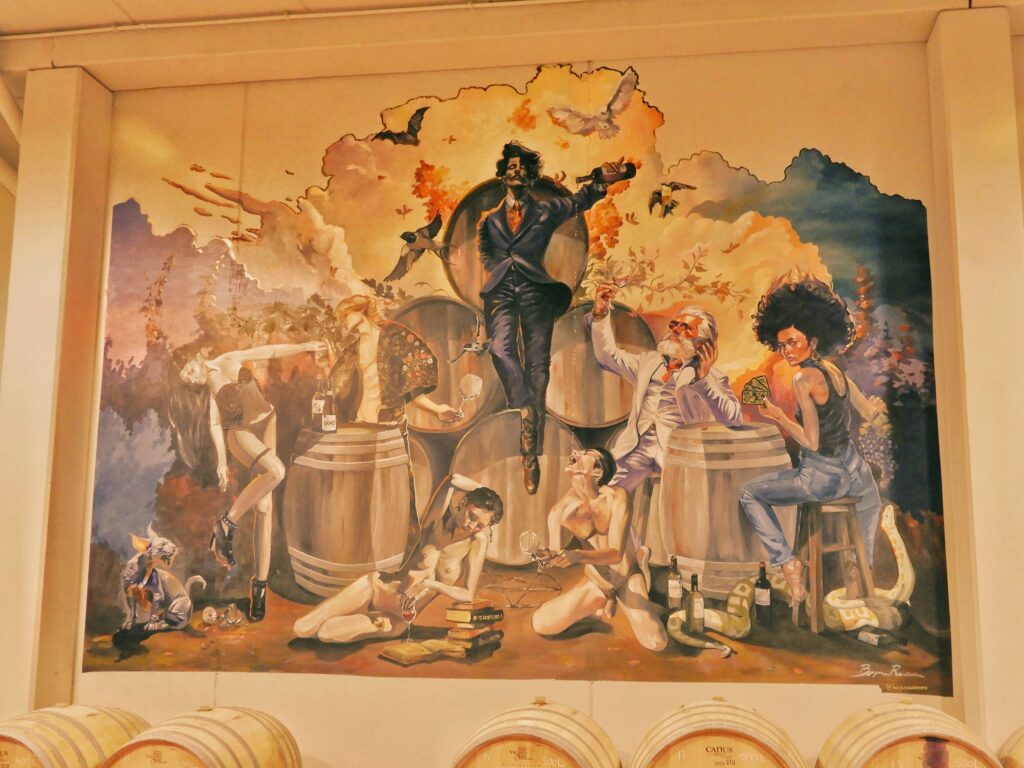
In addition, artistic elements are gradually transforming the winery into a true art gallery. In the barrel room, visitors can already admire a mural depicting the Seven Deadly Sins, titled Pince-Sans-Rire — a French expression referring to a kind of humor that is dry, expressionless, and subtly ironic — created by Mallorcan artist Borja Roca Romero.
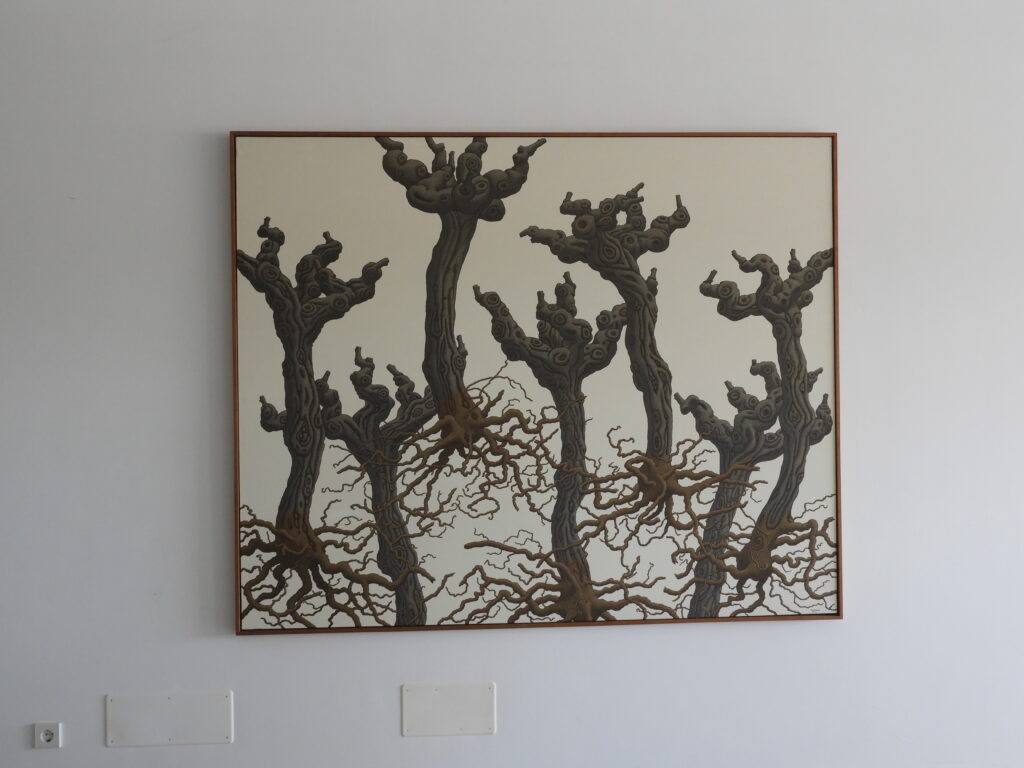
…or a large painting in the tasting room, depicting vine plants in a dreamlike and ethereal way.
Both works make the visit a truly 360° immersive experience, where every sense is engaged and art meets wine in a perfect harmony of creativity and emotion.
THE WINES I TASTED: WHEN THE SOUL IS IN THE GLASS
My tour ended with the tasting of the estate’s most representative wines, a further sensory journey to understand the soul, tradition, and philosophy that Pilar and her team proudly carry forward, balancing records, history, and avant-garde spirit.
Together with my guide Pilar, I tasted:
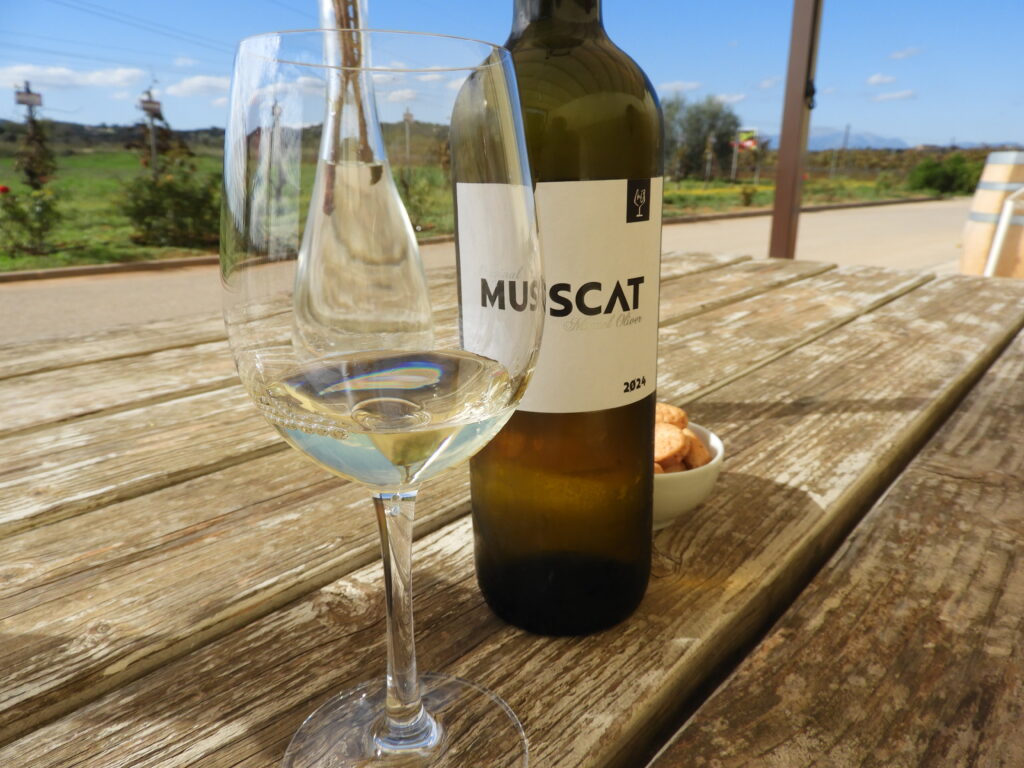
Muscat (Moscatel de Frontignan and de Alejandría): a dry white wine made from grape varieties usually used for sweet wines. Bright and aromatic, with notes of orange blossom and light honey on the nose; on the palate, it’s fresh, elegant, and balanced between acidity and savoriness, with a slightly bitter finish.
A wine that surprises by breaking the mold of the classic sweet Moscatel, and that also holds a record: it was the first dry Moscatel wine ever produced in Spain.
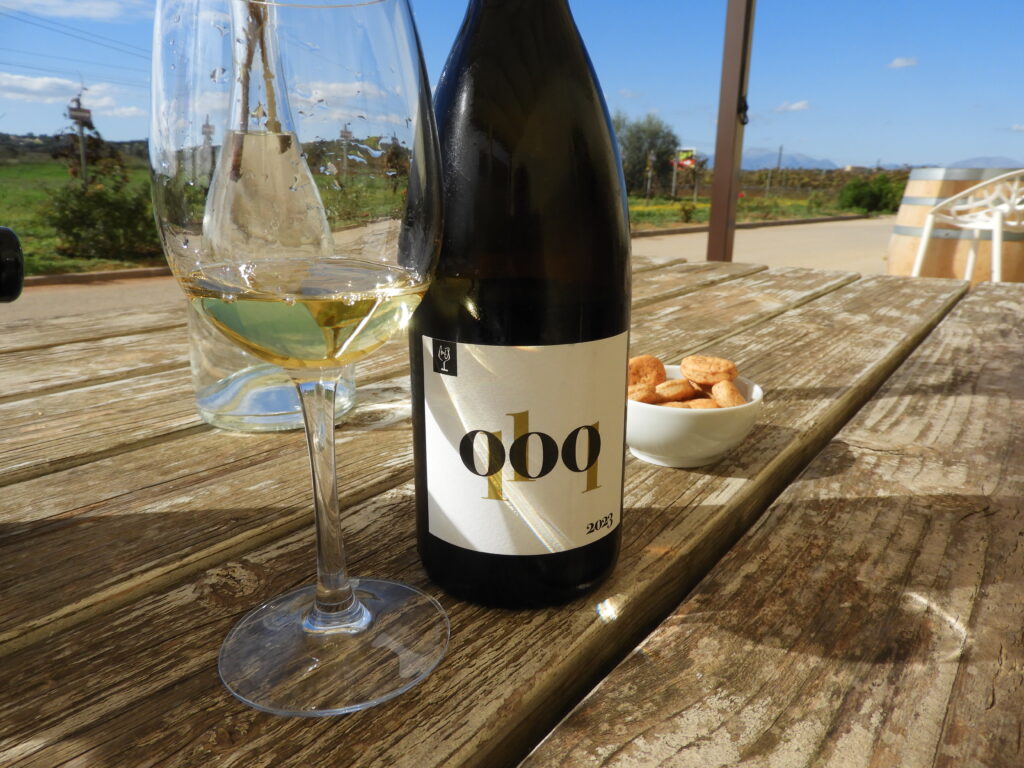
Que bo que es (Giró grape): an intense and complex white wine, with floral, fruity, and varietal notes, and a finish that irresistibly invites a second sip.
As Pilar pointed out, it’s a wine that, if tasted blind, you might easily mistake for a red. Fermented partly in ceramic vessels and partly in acacia barrels, the latter being less invasive than oak, it showcases a refined balance between structure and delicacy.
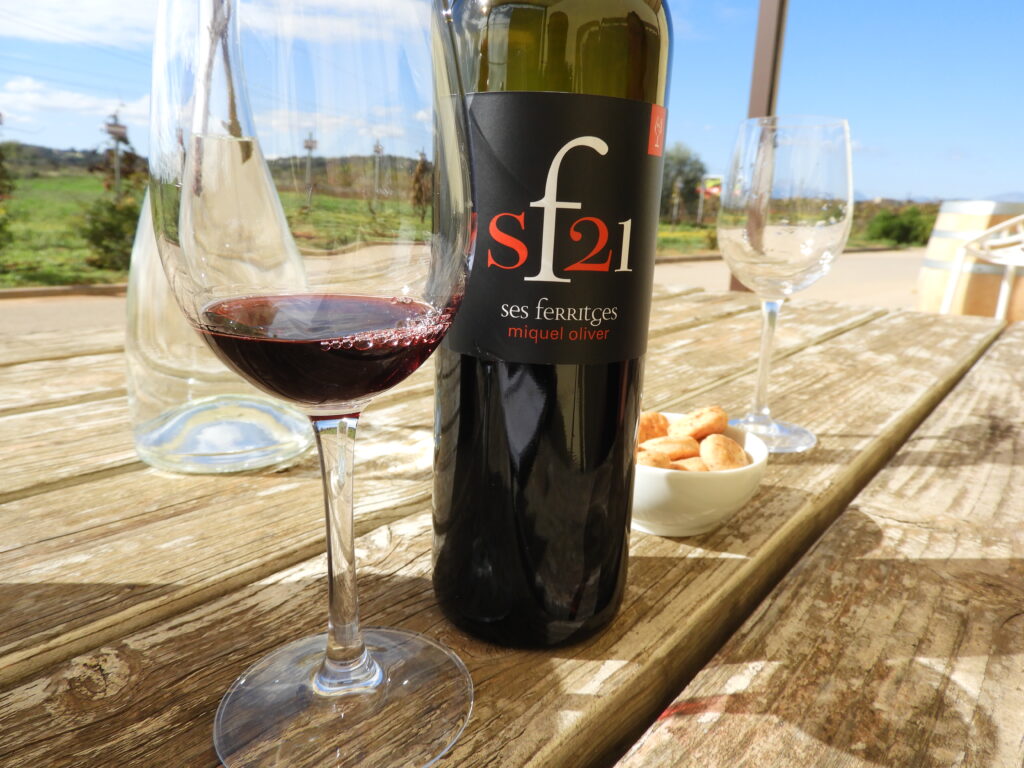
SF21 Ses Ferritges (Callet + Merlot + Cabernet + Syrah): a red wine of great structure and elegance, with soft yet firm tannins and aromas of ripe fruit, vanilla, spices, and toffee caramel.
Aged for 11 months in French and American oak barrels, it perfectly combines the local soul of Callet with the international character of its blending partners, resulting in a wine that is both harmonious and expressive.
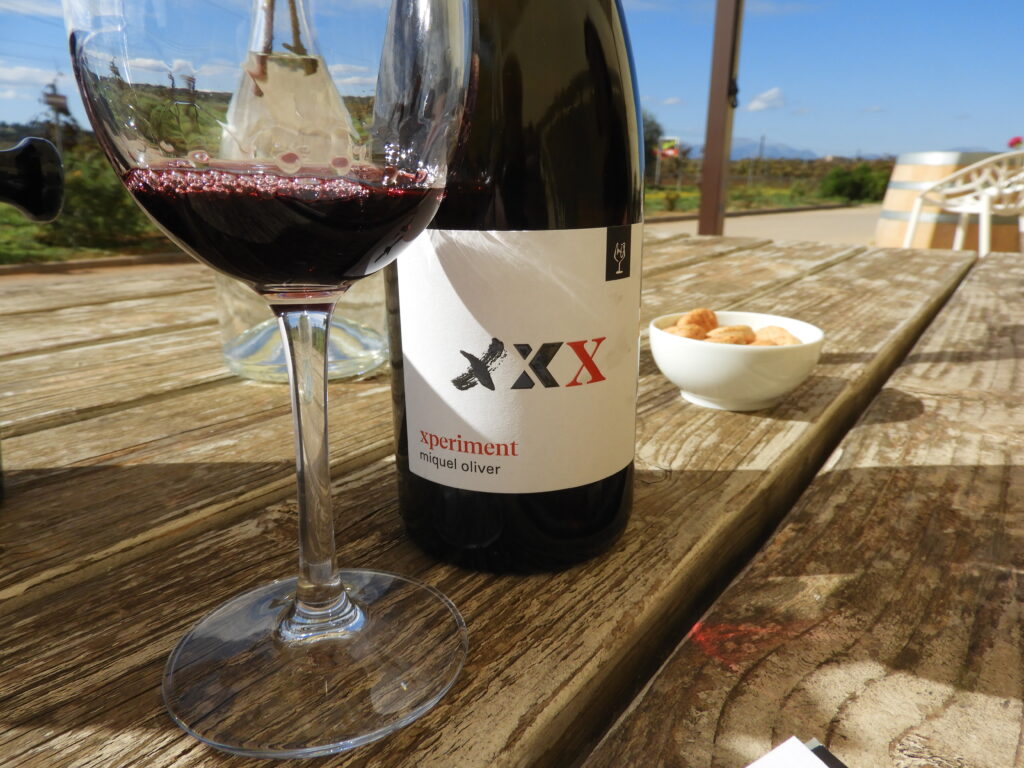
Xperiment (100% Callet from 70-year-old vines, aged 18 months in French oak barrels): an intriguing and captivating red wine. Callet is a native Mallorcan grape, and only vines of this age can yield such a fascinating and uncommon expression.
On the nose, it reveals black fruit, graphite, clay, spices, chocolate, and licorice; on the palate, it’s dry and tannic, with a slightly bitter finish that evokes wood and earth, a wine that tells the deep, rugged soul of the island.
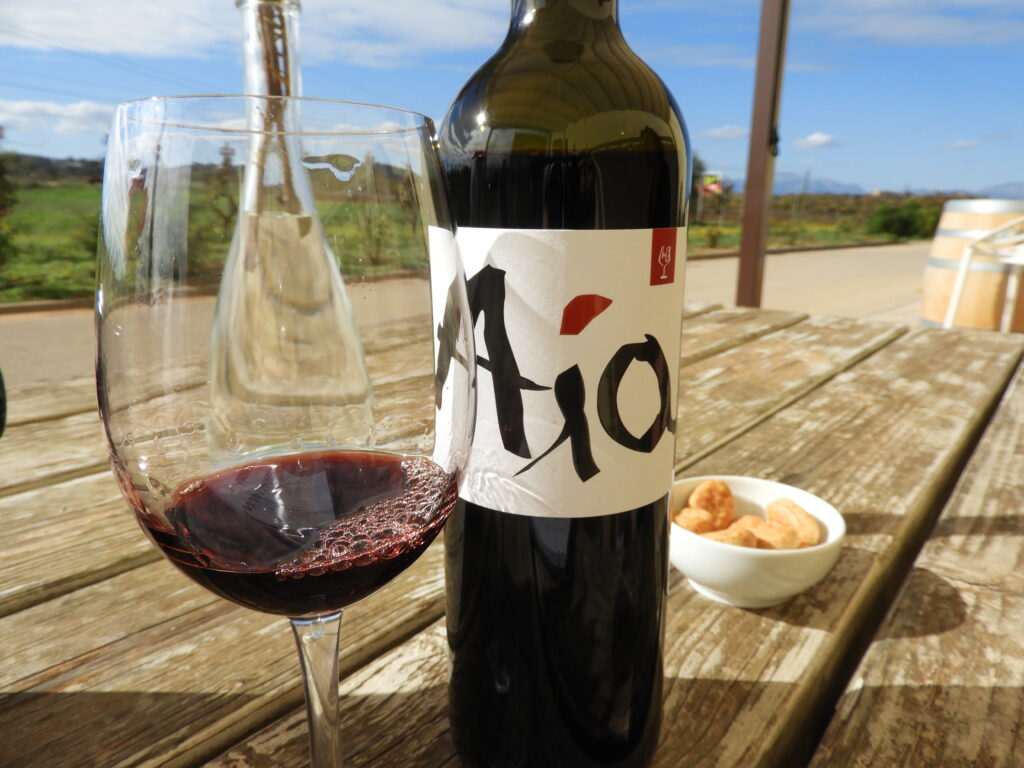
AIA (single-varietal Merlot): a red wine dedicated to Pilar’s mother, Anamaria, affectionately called Aia when they were children.
It shows deep cherry tones, a complex bouquet, and sweet tannins with tactile sensations reminiscent of chocolate.
Elegant and persistent, it’s a wine that carries both emotional depth and refined craftsmanship, a heartfelt tribute in liquid form.
EVERYTHING IS POSSIBLE
On an island that, for many, means mar y playa – sun and sea – Bodega Miquel Oliver invites you to discover its heartland, its soil, and its wines as reflections of a place that has so much more to offer.
Here, family history isn’t a burden but a driving force. Innovation isn’t a betrayal of the past — it’s an exploration of the future.
“Todo es posible,” reads the winery’s motto: everything is possible.
And here, it truly is: even that, after a stroll among the vines, with a glass in hand, you might be surprised to find a Mediterranean island revealed in an unexpected sip.
If you’re in Mallorca, or planning to come, set aside half a day for Petra. Book the tour that speaks to you most and treat yourself to the luxury of exploring a winery that isn’t just to be visited, but to be lived.
Where is Miquel Oliver? Mappa

Non limitarti a bere. Impara a conoscere il tuo vino, dalla terra al bicchiere
Puoi scegliere tra l’adozione di un filare in Toscana, Puglia, Piemonte o Maiorca. Un percorso di 12 mesi per scoprire il vino in un modo nuovo: non tra banchi di scuola, ma vivendo la vigna giorno per giorno
- 12 “Lezioni in Vigna” (email mensili): non spam commerciale, ma il racconto vivo del tuo filare. Seguirai il ciclo biologico: dalla potatura invernale alla fioritura, fino alla vendemmia, capendo perché il vino ha quel sapore;
- L’esame organolettico (le tue bottiglie): ricevi a casa il vino prodotto dal vitigno che hai scelto (Toscana o Puglia). Non solo bottiglie da stappare, ma la prova tangibile di tutto ciò che hai imparato durante l’anno;
- Il cuore del percorso (la visita ed esperienza offline): vieni a incontrare il vignaiolo, tocca con mano la terra che hai adottato, e degusta il vino proprio dove nasce. È il momento in cui la teoria diventa realtà;
- Il tuo sigillo (la targhetta o la bottiglia personalizzate): il tuo nome sul tuo filare, un promemoria costante del tuo legame con la terra.